Simulation of heat treatments to examine microstructural changes – up to 1,100 °C, with programmable temperature ramps.

Heat Treatment in a Chamber Furnace

Simulation of heat treatments to examine microstructural changes – up to 1,100 °C, with programmable temperature ramps.

Contact us now
  • Chamber furnace up to 1,100 °C
  • Programmable heating and cooling rates
  • Normalising, stress-relief, soft & spheroidise annealing

Heat simulation

Heat treatment according to your specifications

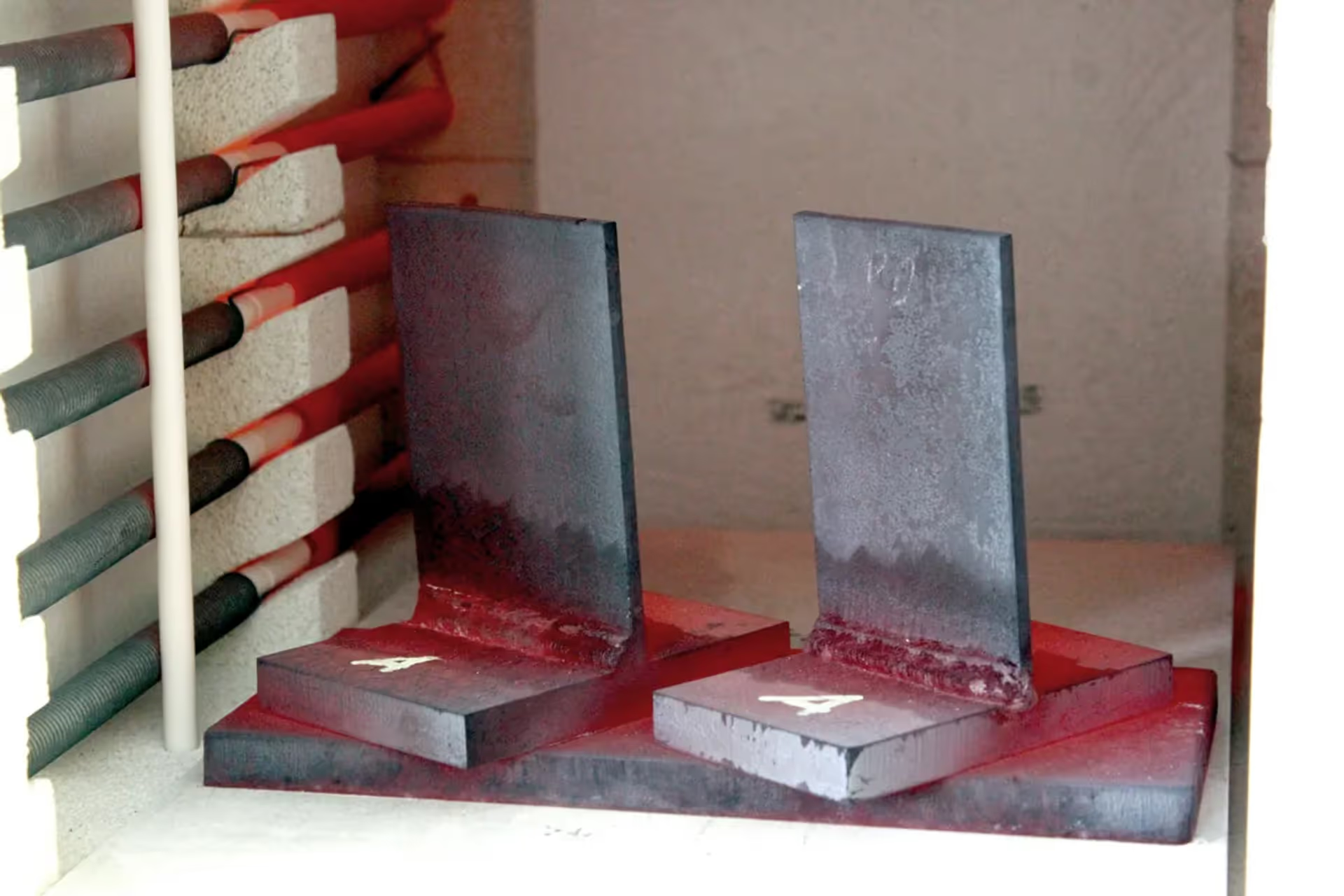
Heat-treated welded specimens after removal from the chamber furnace

Heat-treated specimens

With our chamber furnace we subject your specimens to a heat treatment according to your specifications. Temperatures of up to 1,100 °C can be reached. The furnace chamber has the following dimensions:

  • Width: 300 mm
  • Height: 280 mm
  • Depth: 520 mm

The chamber furnace allows temperature ramps to be programmed to ensure constant heating and cooling rates. In addition, the chamber temperature is measured continuously and evaluated digitally – on request you receive the complete temperature log.

The following heat treatments are possible
  • Normalising
  • Stress-relief annealing
  • Soft annealing
  • Spheroidise annealing (annealing to globular carbides)
  • Coarse-grain annealing
  • Long-term annealing
  • Curing of adhesive bonds
Heat treatment + testing from a single source

The strength lies in the combination: we treat your specimens thermally and then determine the mechanical properties such as yield strength, tensile strength, elongation or hardness – complemented by metallographic sections to assess the microstructural change. A typical application is the heat treatment of welded test pieces for pre-production or procedure qualification tests according to DIN EN ISO 15613 and 15614.

Note: The heat treatment itself is provided as a complementary service outside the accredited scope. The subsequent tests – tensile test, hardness test, metallography – are performed in the laboratory accredited according to DIN EN ISO/IEC 17025.

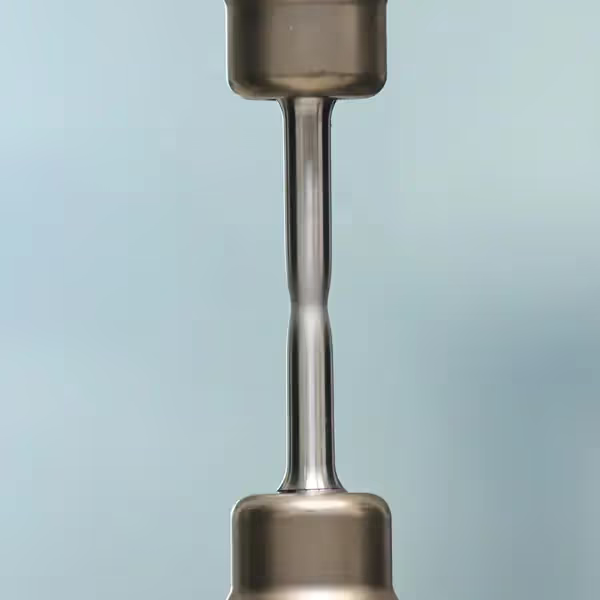
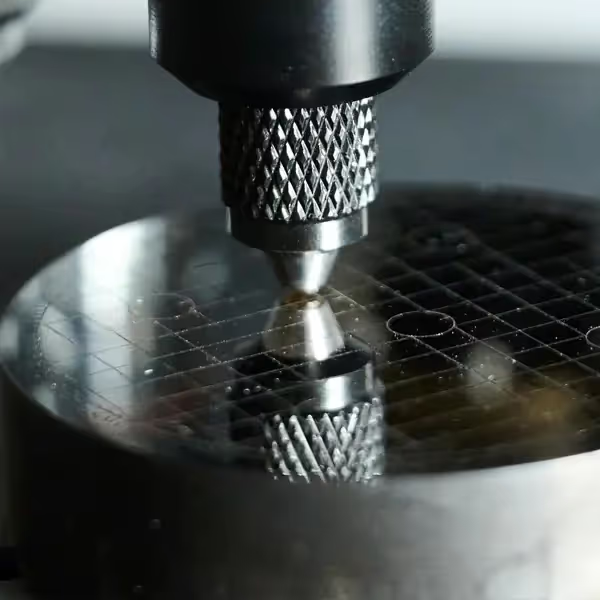
Testing after heat treatment

The testing laboratory fulfils the requirements of DIN EN ISO/IEC 17025.

FAQ

Frequently Asked Questions

Which heat treatments does Zeros GmbH offer?

Zeros GmbH performs heat treatments of specimens in a chamber furnace at temperatures of up to 1,100 °C – with programmable temperature ramps for constant heating and cooling rates and continuous digital temperature recording. Available treatments include normalising, stress-relief annealing, soft annealing, spheroidise annealing (annealing to globular carbides), coarse-grain annealing, long-term annealing and the curing of adhesive bonds. A typical application is the heat treatment of welded test pieces for pre-production and procedure qualification tests according to DIN EN ISO 15613 and 15614, as well as heat simulation to examine microstructural changes. The subsequent testing (tensile test, hardness test, metallography) is performed in the laboratory accredited according to DIN EN ISO/IEC 17025; the heat treatment itself is a complementary service outside the accredited scope.

Heat treatment in practice: process & evaluation
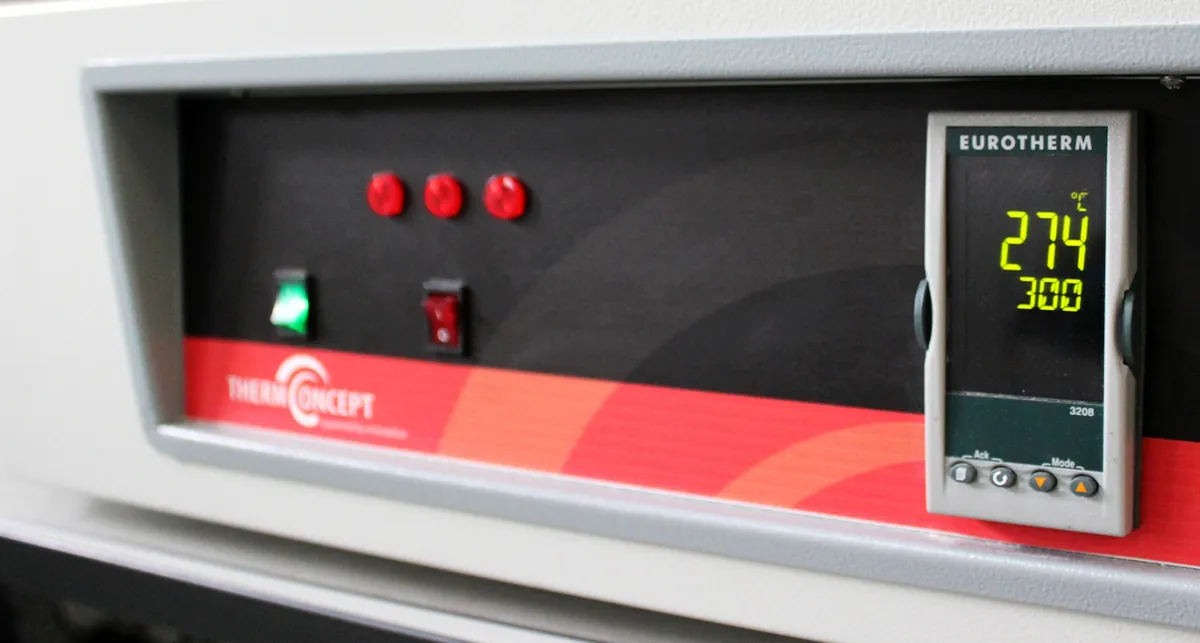
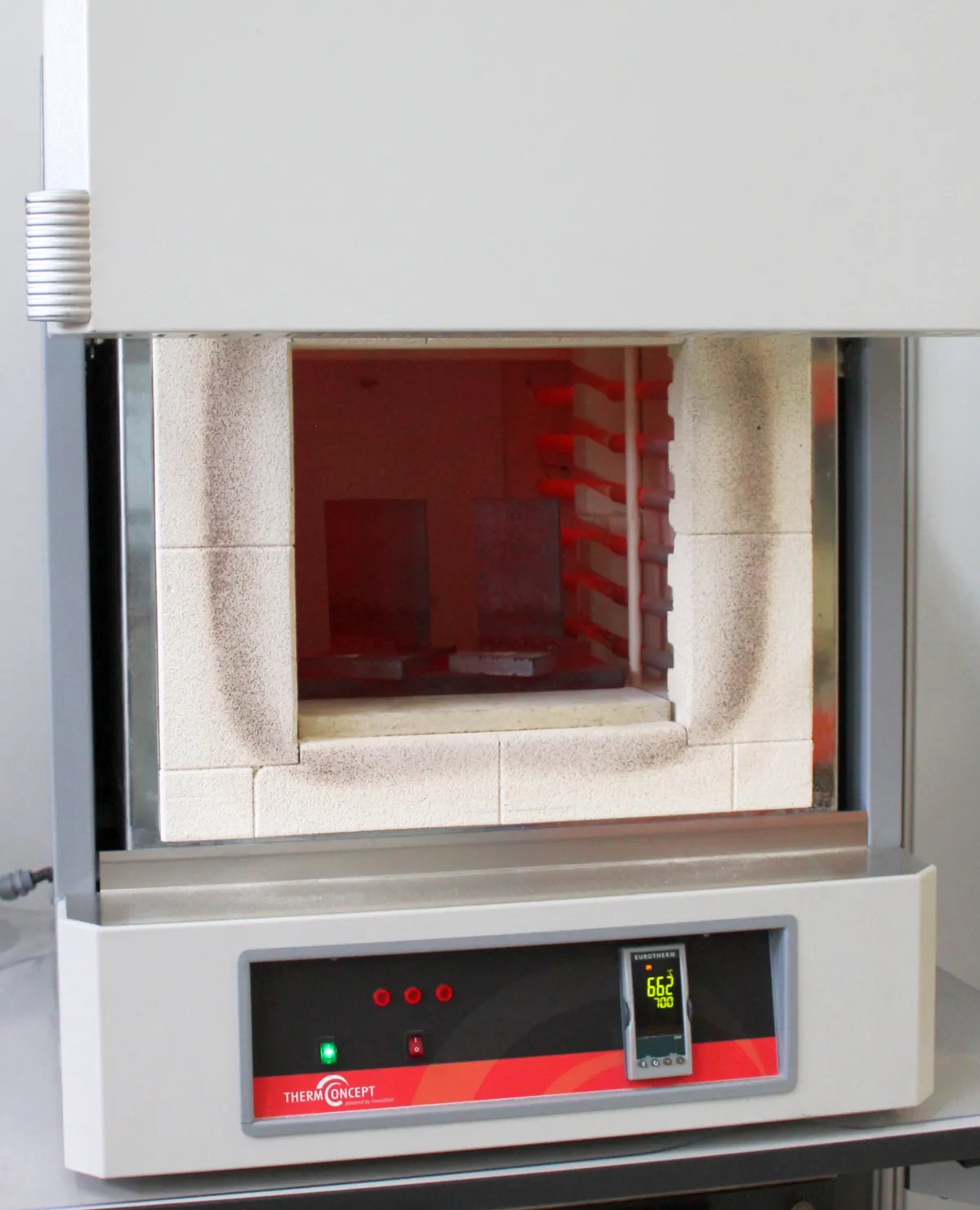
Chamber furnace of Zeros GmbH with a view of the glowing furnace chamber
How your heat treatment works
  1. Step 1 – Specifications & specimen receipt

    You define target temperature, holding time and heating/cooling rates – or we advise you based on the material and the aim of the examination. On request we produce the specimens in our specimen production.

  2. Step 2 – Heat treatment in the chamber furnace

    Execution with programmed temperature ramps up to 1,100 °C; the chamber temperature is measured continuously and documented digitally.

  3. Step 3 – Testing & microstructure examination

    Afterwards we determine the mechanical properties in the accredited laboratory (tensile test, hardness test, Charpy impact test) and assess the microstructural change metallographically.

  4. Step 4 – Report

    You receive the temperature log and, on request, the test report with all characteristic values and micrographs – as a basis for procedure qualification according to DIN EN ISO 15613/15614 or your own investigations.

Contact us – we will put together the right combination of heat treatment and testing for your task.